

Exclusive
BPC 157 | PL-10 | Wolverine Peptide: Synergistic Tissue Repair Pathways

Secure Checkout & Buyer Protection

Extended Manufacturer Warranty

Free Express Shipping Over $250

30-Day Hassle-Free Returns
- Scientific Definition
- Common Research Applications
- Synonyms
- Product Specifications
- Quality and Testing
- Referenced Citations
- Behind The Peptide
- Glossary
BPC 157 (Body Protection Compound 157) is a synthetic pentadecapeptide derived from a fragment of a larger gastric protein. In research settings, it is studied for its role in cell signaling, tissue integrity, and repair-associated pathways.
Mechanism of Action
Published preclinical literature explores BPC 157 in relation to:
- Endothelial signaling
- Angiogenesis modulation
- Nitric oxide pathways
- Fibroblast migration
- Extracellular matrix interaction
PL-10 (BPC 157) or the wolverine peptide has appeared in scientific literature exploring:
- Tissue repair mechanisms
- Tissue repair peptides
- Angiogenesis pathway modeling
- Cell migration studies
- Gastrointestinal signaling research
- Tendon and connective-tissue models (preclinical)
RUO NOTICE:
All references describe experimental or preclinical research. The PL-10 or PL-14736 (wolverine peptide) sold here is not approved for human use and makes no performance claims.
- BPC 157
- Body Protection Compound 157
- PL-10
- PL-14736
- Bepecin
- PLD-116
- “Wolverine peptide” (non-scientific nickname used online; educational reference only — not used in product positioning)
- Wolverine Stack
Available Forms
- Product Name: BPC 157
- Synonyms: PL-10, PL-14736, Bepecin, wolverine peptide
- Classification: Synthetic pentadecapeptide
- Format: Lyophilized powder
- Grade: Research Use Only (RUO)
- Purity: ≥98% (HPLC verified)
- Molecular Formula: C₆₂H₉₈N₁₆O₂₂
- Molecular Weight: ~1419.5 g/mol
- Amino Acid Sequence:
- Gly-Glu-Pro-Pro-Pro-Gly-Lys-Pro-Ala-Asp-Asp-Ala-Gly-Leu-Val
- Salt Form: Acetate (recommended for stability)
- CAS Number: 137525-51-0
Use Limitation:
BPC 157, also known as PL-10, is supplied strictly for laboratory research. Not for human or animal administration
As a trusted supplier of pure BPC 157 peptide (wolverine peptide), all batches are manufactured under controlled conditions appropriate for RUO peptides.
Each lot includes:
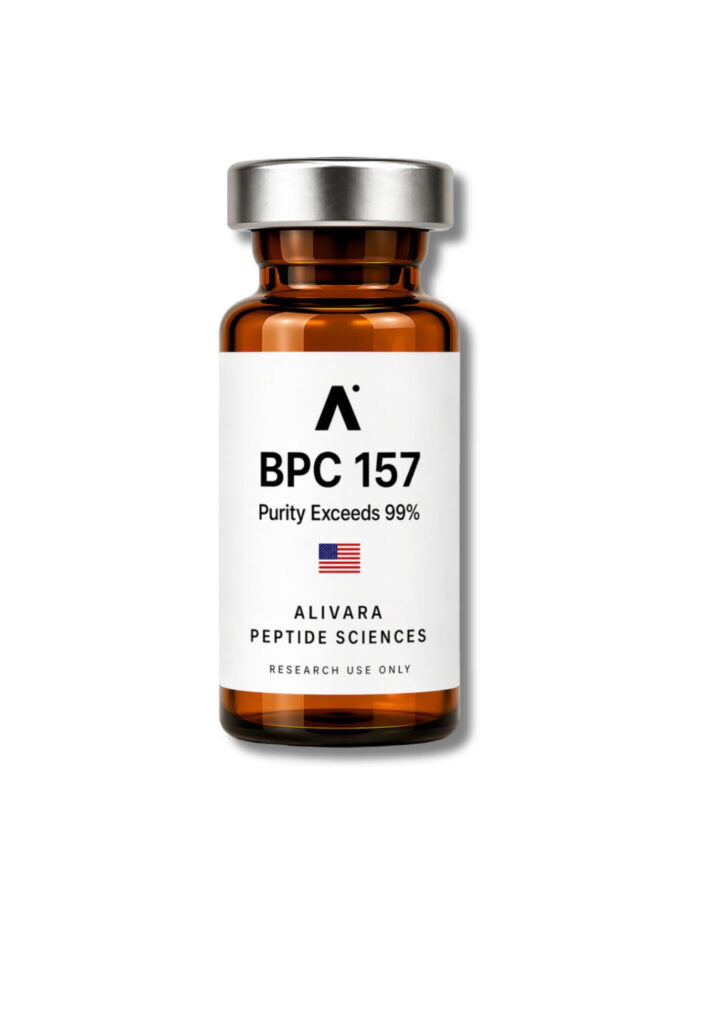
- Certificate of Analysis (Batch-specific COA: See here) – each bottle contains a QR code verifying quality & testing
- Purity: ≥98% verified by third-party HPLC
- Identity: confirmed via mass spectrometry
- Endotoxin, sterility, and heavy-metal screening
- Vertical Integration: Complete oversight and traceability from initial synthesis to final packaging and shipment.
- Stability Guaranteed: Lot tracking and stability testing supported by -20°C cold-chain storage to protect formulation integrity.
- Expertise: Formulae designed by a cross-disciplinary team of R&D, biochemistry, & compliance experts.
The nickname wolverine peptide is referenced here only for educational clarity.
Sikiric, P. et al. (2010). Stable gastric pentadecapeptide BPC 157: novel therapy in gastrointestinal tract. https://pubmed.ncbi.nlm.nih.gov/21548867
Chang, C. et al. (2014). Pentadecapeptide BPC 157 Enhances the Growth Hormone Receptor Expression in Tendon Fibroblasts. https://pmc.ncbi.nlm.nih.gov/articles/PMC6271067
Modulatory effect of gastric pentadecapeptide BPC 157 on angiogenesis in muscle and tendon healing. https://www.researchgate.net/publication/51443032_Modulatory_effect_of_gastric_pentadecapeptide_BPC_157_on_angiogenesis_in_muscle_and_tendon_healing
- BPC 157 is derived from a fragment of a larger protein found in human gastric juice, but the exact parent protein has not been definitively identified in published research.
- Researchers study how it may influence the body’s internal “repair instructions,” especially when healing is slow or disrupted.
- Angiogenesis Connection: It appears in research exploring how new blood vessels form—an essential step in delivering nutrients and rebuilding damaged tissue.
- Unlike highly specialized compounds, BPC 157 is studied across multiple systems, like muscle, tendon, gut, and connective tissue models.
- Its gastric origin makes it interesting for research on how peptides remain stable and active in challenging biological conditions.
- Gastric Juice: A digestive fluid produced in the stomach made up mainly of hydrochloric acid, pepsin (a protein-digesting enzyme), mucus, and intrinsic factor, working together to break down food and protect the stomach lining.
- Angiogenesis: The formation of new blood vessels from existing ones, a critical process that supplies oxygen and nutrients to healing or stressed tissues.
- Fibroblasts: Specialized cells responsible for producing collagen and rebuilding tissue structure during the repair process.
- Nitric Oxide (NO) Signaling: A cellular communication pathway that helps regulate blood flow, vessel dilation, and oxygen delivery to tissues.
- Extracellular Matrix (ECM): A network of proteins (like collagen) surrounding cells that provides structure and plays a key role in tissue repair and stability.
- Cell Migration: The movement of cells to areas of injury, allowing the body to rebuild and restore damaged tissue.Inflammatory Response: The body’s immediate reaction to injury or stress, involving immune signals that help initiate repair—but must be tightly regulated.
BPC 157: Future Medical Insight
| Research Area | Research Status |
|---|---|
Tendon & ligament injuries | Studied in preclinical research. |
| Muscle damage & soft-tissue trauma | Studied in preclinical research. |
| Gastrointestinal injury & ulcers | Studied in preclinical research. |
| Inflammatory bowel disease models | Studied in preclinical research. |
| Chronic inflammation pathways | Studied in preclinical research. |
| Wound-healing impairment | Studied in preclinical research. |
| Vascular injury & ischemia models | Studied in preclinical research. |
| Nerve and connective-tissue damage | Studied in preclinical research. |
| Arthritis & joint degeneration models | Studied in preclinical research. |
| Approved disease treatment | No approved therapeutic use has been established. |
Gut Injury and Barrier Breakdown
BPC 157 appears in research examining how intestinal tissue maintains integrity after damage or stress.
Why Choose Alivara’s BPC 157
Transparency
Alivara’s peptides are accompanied by visible documentation- QR codes for verification will be included.
Verified Purity
Third-party HPLC and mass-spectrometry analyses verify identity and purity. We adhere to CGMP guidelines.
Education
Alivara Peptide Sciences offers educational context so researchers can understand each product.
Compliance
Your peace of mind. Built in FDA-registered, NSF-certified sites following strict CGMP and ISO standards.
Professionalism
Where passion meets precision. Formulae designed by a cross-disciplinary team of R&D and biochemistry experts.
Stability
Our systems are built in compliance with CGMP standards for long-term regulatory resilience.
Who Can Order BPC 157

PL-10 | PL-14736 | Wolverine Research Peptide: FAQs
Is BPC 157 FDA approved?
No, BPC 157 or the wolverine peptide is not FDA-approved and is supplied strictly as a research chemical.
What does “wolverine peptide” mean?
“Wolverine peptide” is a non-scientific nickname sometimes used online. It has no regulatory or scientific standing and is referenced here only for educational clarity.
Where can I buy BPC 157?
Pharmaceutical BPC 157 is not approved. This page refers only to BPC 157 research peptide, available online for qualified laboratories.
Does BPC 157 work?
In preclinical research (mainly animal models), BPC 157, PL-14736 or PL-10, has demonstrated potential effects on tissue repair, blood vessel formation, and inflammation pathways. These studies show biological activity in contexts like tendon and ligament healing. However, there is not enough high-quality human clinical data to confirm its effects in people.
What does BPC 157 stand for?
BPC 157 or PL-10 is a pentadecapeptide (15 amino acids) derived from a protective peptide found in gastric juice.
Does BPC 157 help with weight loss?
There is no strong evidence from clinical research supporting weight-loss effects of PL-10, PL-14736 or BPC 157. Most studies focus on healing processes rather than metabolic outcomes.
Is BPC 157 good for arthritis?
Preclinical studies suggest that PL-10, also known as BPC 157, has effects on tissue repair and inflammation pathways, but high-quality human trials on arthritis are lacking. Findings in animals do not equate to human clinical efficacy.
How long can BPC 157 be stored? | How long BPC 157 out of fridge?
Lyophilized (freeze-dried) peptides are best stored cold. Refrigeration (36–46 °F / 2–8 °C) is recommended for routine storage, while frozen storage (−4 °F / −20 °C) is preferred for long-term preservation. Avoid moisture exposure and repeated temperature cycling.
These guidelines apply only to laboratory storage, not clinical use.
How to Reconstitute BPC 157 (Laboratory Context)?
In laboratory settings, BPC 157 peptide is typically supplied as a lyophilized (freeze-dried) powder and must be dissolved before use in research applications.
To reconstitute, a measured volume of sterile diluent—commonly bacteriostatic water—is slowly added to the vial. The liquid is introduced gently along the inner wall of the vial (rather than directly onto the powder) to help preserve peptide integrity. The solution is then allowed to sit until fully dissolved; gentle swirling may be used, but shaking is generally avoided.
The final concentration depends on how much liquid is added.
How is BPC 157 packaged and shipped to preserve laboratory integrity?
Shipments are prepared according to RUO handling standards and may include insulated packaging or cold-chain options depending on order size and destination. All packages are clearly labeled as Research Use Only and include batch-specific documentation such as Certificates of Analysis.
How Fast Is BPC 157 Shipped After Ordering?
Orders for BPC 157 is typically processed and shipped within 1-–2 business days after order verification, depending on documentation review and inventory availability.
How Could BPC-157 Be Useful for Medicine in the Near Future?
Researchers study BPC-157 in laboratory and preclinical models to learn:
- how repair signals are turned on after tissue damage
- how new blood vessels form during recovery
- how cells communicate during healing and regeneration
This knowledge can help scientists design better drugs, therapies, or biomaterials in the future, even if BPC-157 itself is never used as a medicine.
All peptides are manufactured in FDA-registered and NSF-certified facilities. CGMP (Current Good Manufacturing Practice) and ISO-aligned systems ensure clinical research-grade quality and consistency. Not for human or veterinary use.
Shop Bestsellers
Top-rated gear, ready to ship

Label
Neurotrophic Peptide for CNS Research
High-purity Cerebrolysin peptide supplied for controlled laboratory research, with full analytical documentation included.
Collection Bestsellers
Popular Now
Current favorites you shouldn’t miss.

Exclusive
Batch-specific COA
Each bottle contains a QR code verifying quality & testing
Latest Stories
Catch up on fresh articles and insights
-
What Does KPV Peptide Do?
A recent wave of preclinical papers on melanocortin fragments has…
-
Does MOTS-c Help With Weight Loss? A Research Review

What the Science Shows MOTS-c prevented diet-induced obesity in animal…
-
Tirzepatide vs GLP-1: Similarities and Differences
A quick comparison of practical features across commonly used devices,…